


As a supplier of WPC Timber Tubes, I've been frequently asked whether these innovative products can be used for industrial structures. In this blog post, I'll delve into the characteristics of WPC Timber Tubes, evaluate their suitability for industrial applications, and provide insights based on industry knowledge and practical experience.
Understanding WPC Timber Tubes
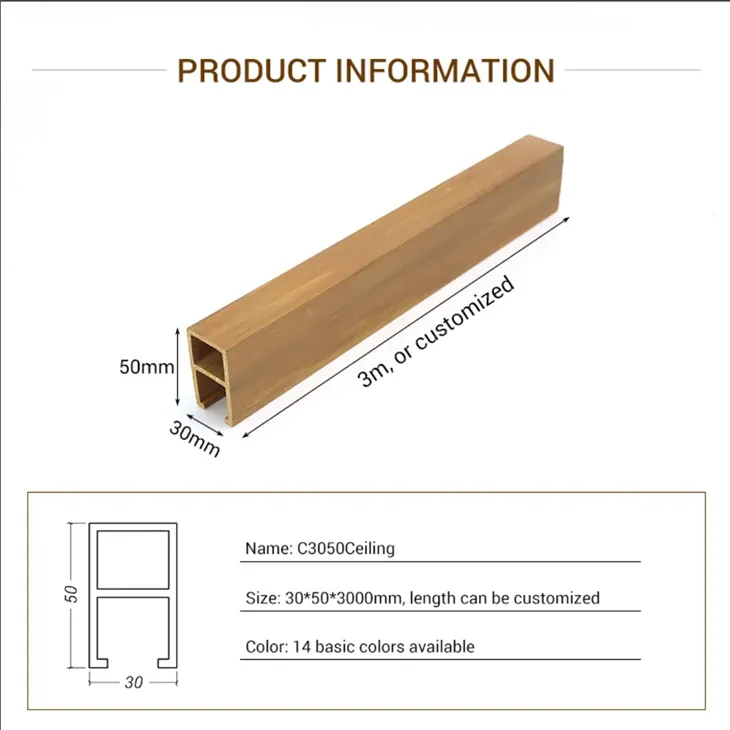
WPC, or Wood - Plastic Composite, is a material that combines wood fibers or flour with thermoplastics. WPC Timber Tubes are extruded profiles made from this composite material. They inherit the natural aesthetic of wood and the durability and workability of plastic.
The production process of WPC Timber Tubes involves mixing wood particles and plastic polymers, along with additives such as colorants, UV stabilizers, and lubricants. This mixture is then extruded through a die to form tubes of various sizes and shapes. The resulting tubes have a smooth surface finish and can be customized in terms of color, length, and wall thickness.
One of the key advantages of WPC Timber Tubes is their environmental friendliness. They are made from recycled wood and plastic materials, reducing the demand for virgin resources. Additionally, they are free from harmful chemicals such as formaldehyde, making them a sustainable choice for construction projects.
Advantages of Using WPC Timber Tubes in Industrial Structures
1. Durability
WPC Timber Tubes are highly resistant to rot, decay, and insect infestation. Unlike traditional wooden tubes, they do not require regular treatments with pesticides or preservatives. This makes them ideal for industrial environments where exposure to moisture, chemicals, and pests is common. For example, in a food processing plant, WPC Timber Tubes can be used for structural supports without the risk of contamination from wood - destroying organisms.
2. Weather Resistance
These tubes can withstand a wide range of weather conditions, including extreme temperatures, humidity, and UV radiation. They do not warp, crack, or splinter like natural wood, ensuring long - term performance in outdoor industrial settings. Whether it's a coastal factory exposed to saltwater spray or a desert - located facility facing high - heat days, WPC Timber Tubes maintain their integrity.
3. Low Maintenance
Maintenance is a significant cost factor in industrial structures. WPC Timber Tubes require minimal maintenance compared to traditional materials. A simple cleaning with soap and water is usually sufficient to keep them looking new. This reduces downtime and maintenance costs over the lifespan of the structure.
4. Design Flexibility
WPC Timber Tubes can be easily cut, drilled, and fastened, allowing for a high degree of design flexibility. They can be used to create complex industrial structures such as mezzanines, platforms, and conveyor supports. Moreover, they can be painted or stained to match the aesthetic requirements of the industrial facility.
5. Cost - Effectiveness
Although the initial cost of WPC Timber Tubes may be slightly higher than that of some traditional materials, their long - term cost - effectiveness is undeniable. The reduced maintenance requirements, longer lifespan, and lower replacement costs make them a more economical choice in the long run.
Potential Challenges and Considerations
1. Load - Bearing Capacity
While WPC Timber Tubes have good strength properties, their load - bearing capacity may be limited compared to steel or concrete. In industrial structures where heavy loads are involved, such as large - scale warehouses or manufacturing plants, careful engineering calculations are required to ensure that the tubes can safely support the intended loads. Reinforcement techniques may also be necessary in some cases.
2. Fire Resistance
WPC materials are generally less fire - resistant than traditional building materials like concrete and steel. In industrial settings where fire safety is a major concern, appropriate fire - retardant treatments or protective coatings may need to be applied to the WPC Timber Tubes. It's important to comply with local fire codes and regulations.
3. Chemical Compatibility
In industrial environments where exposure to chemicals is common, it's essential to ensure that the WPC Timber Tubes are chemically compatible with the substances they may come into contact with. Some chemicals may cause degradation or discoloration of the tubes, so it's advisable to conduct compatibility tests before installation.
Case Studies: Successful Use of WPC Timber Tubes in Industrial Structures
There have been several successful applications of WPC Timber Tubes in industrial structures. For instance, in a small - scale furniture manufacturing plant, WPC Timber Tubes were used to construct a mezzanine floor. The tubes provided sufficient support for the additional storage space, and their low - maintenance nature allowed the plant to focus on production rather than upkeep.
In another case, a coastal aquaculture facility used WPC Timber Tubes for its floating platforms. The tubes' resistance to saltwater corrosion and weathering ensured the long - term stability of the platforms, even in the harsh marine environment.
Comparison with Other Materials
When considering using WPC Timber Tubes for industrial structures, it's useful to compare them with other commonly used materials.
1. Steel
Steel is known for its high strength and load - bearing capacity. However, it is prone to corrosion, especially in humid or corrosive environments. WPC Timber Tubes, on the other hand, are corrosion - resistant and do not require expensive anti - corrosion treatments. Additionally, steel is heavier than WPC, which can increase transportation and installation costs.
2. Concrete
Concrete is a durable and fire - resistant material. But it is difficult to shape and requires a long curing time. WPC Timber Tubes offer greater design flexibility and can be installed more quickly, reducing construction time and costs.

3. Traditional Wood
Traditional wood has a natural aesthetic appeal but is vulnerable to rot, decay, and insect damage. It also requires regular maintenance. WPC Timber Tubes combine the look of wood with enhanced durability and low - maintenance features.
Other Applications of WPC Products
In addition to industrial structures, WPC products have a wide range of other applications. For example, WPC Ceiling Panel can be used to create modern and stylish ceilings in commercial buildings. They are lightweight, easy to install, and offer good acoustic properties.
Composite WPC Fence is another popular application. It provides a durable and attractive alternative to traditional wooden or metal fences. WPC fences are resistant to weathering, fading, and scratching, making them suitable for both residential and commercial properties.
Conclusion
In conclusion, WPC Timber Tubes can be a viable option for industrial structures, provided that the specific requirements of the project are carefully considered. Their durability, weather resistance, low maintenance, and design flexibility make them an attractive choice for many industrial applications. However, challenges such as load - bearing capacity, fire resistance, and chemical compatibility need to be addressed through proper engineering and treatment.
If you are considering using WPC Timber Tubes for your industrial project, I encourage you to reach out to discuss your specific needs. Our team of experts can provide detailed information, technical support, and customized solutions to ensure the success of your project.
References
- "Wood - Plastic Composites: Materials, Processing, and Products" by Leszek A. Pizzi and Anandjiwala R. D.
- "Handbook of Wood Chemistry and Wood Composites" edited by R. Rowell, J. Han, and X. Cai.
- Industry reports on WPC materials and their applications in construction.


