


Hey there! As an acoustic wall panel supplier, I've been getting a lot of questions lately about how acoustic wall panels stack up against acoustic foams. So, I thought I'd take a deep dive into this topic and share my insights with you all.
Let's start with the basics. Acoustic wall panels and acoustic foams are both designed to control sound in a space. They work by absorbing sound waves, reducing echoes, and improving the overall acoustic quality of a room. But how do they compare in terms of performance, aesthetics, and practicality?
Performance
When it comes to performance, acoustic wall panels and acoustic foams have their own strengths. Acoustic foams are known for their high sound absorption coefficients, especially in the mid - to high - frequency range. They're great at reducing sharp, high - pitched noises like voices, music treble, and the clicking of keyboards. Foams usually have a porous structure that allows sound waves to penetrate and dissipate as heat energy.
On the other hand, acoustic wall panels offer a more balanced sound absorption across a wider frequency range. Many high - quality acoustic wall panels are designed to absorb both low - frequency and high - frequency sounds effectively. This makes them ideal for spaces where a variety of sounds need to be controlled, such as recording studios, home theaters, and conference rooms.
For example, in a recording studio, you need to control not only the high - pitched vocals and instrument sounds but also the low - frequency bass tones. Acoustic wall panels can do a better job of creating a more uniform acoustic environment, reducing the risk of standing waves and resonance that can distort the sound.
Aesthetics
Aesthetics play a huge role in the choice between acoustic wall panels and acoustic foams. Acoustic foams often come in basic shapes like wedges or egg crates, and they usually have a rather industrial look. While they can be painted to match the room's color scheme to some extent, their appearance is still quite limited.
Acoustic wall panels, on the other hand, offer a wide range of design options. You can find wall panels in various shapes, sizes, and materials. For instance, you can check out our Soundproof Wall Panels for Interior Decor. These panels are not only great at sound absorption but also add a touch of elegance to any room. They can be made from wood, fabric, or even metal, allowing you to choose a style that suits your interior design perfectly.
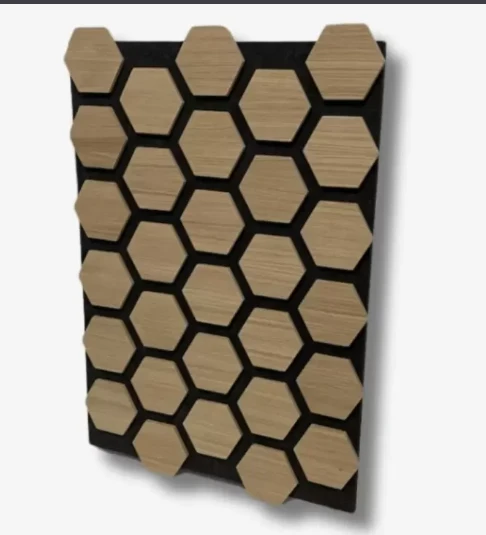
We also have Acoustic Panel With Hexagon - shaped. The unique hexagon design not only looks modern and stylish but also provides excellent sound - absorbing properties. It can be a real eye - catcher in your space.
Practicality
In terms of practicality, both have their pros and cons. Acoustic foams are relatively lightweight and easy to install. You can simply stick them on the wall using adhesive, which makes them a popular choice for DIY projects. However, they are often more fragile and can be easily damaged if not handled carefully.
Acoustic wall panels, although they may require a bit more effort to install, are generally more durable. They can withstand normal wear and tear, making them a long - term investment. Some wall panels, like our Fluted Sound Absorbing Panel, are designed for easy installation and maintenance. The fluted design not only enhances the sound - absorbing ability but also makes the panel more robust.
Cost
Cost is always a factor when making a decision. Acoustic foams are usually more budget - friendly, especially for small - scale projects. They are widely available in the market, and the price per square foot is relatively low.
Acoustic wall panels, on the other hand, can vary greatly in price depending on the material, design, and quality. While some high - end wall panels can be quite expensive, there are also many affordable options available. In the long run, considering their durability and better performance, acoustic wall panels can offer better value for money.
Application
The application of these two products also differs. Acoustic foams are commonly used in home recording setups, small offices, or as a quick and inexpensive solution for sound control. They can be easily added to a room to reduce noise without major renovations.
Acoustic wall panels are more suitable for professional settings such as commercial recording studios, large conference halls, and high - end home theaters. Their superior performance and aesthetic appeal make them a top choice for spaces where high - quality sound control and a good interior look are required.
Conclusion
So, to sum it up, both acoustic wall panels and acoustic foams have their own advantages and disadvantages. If you're on a tight budget and need a simple solution for a small space, acoustic foams might be the way to go. But if you're looking for a high - performance, aesthetically pleasing, and long - lasting sound - control solution, acoustic wall panels are definitely worth considering.
If you're interested in our acoustic wall panels or have any questions about sound control in your space, feel free to reach out. We're here to help you make the best choice for your needs. Whether it's for a home project or a commercial venture, we've got the right acoustic wall panels for you. Let's start a conversation and see how we can enhance the acoustic quality of your space together.

References
- Acoustics: Fundamentals and Applications, by Allan D. Pierce
- Handbook of Noise and Vibration Control, edited by Malcolm J. Crocker


