


Hey there! I'm a supplier of WPC Timber Tubes, and today I wanna chat about how these awesome products handle extreme temperatures.
First off, let's understand what WPC Timber Tubes are. WPC stands for Wood - Plastic Composite. It's a blend of wood fibers and plastic, which gives it the best of both worlds. These tubes are used in a bunch of applications, like construction, outdoor furniture, and decorative elements. You can check out more about them here: WPC Timber Tubes.
Now, let's dig into the topic of extreme temperatures. Extreme temperatures can be divided into two main categories: extreme heat and extreme cold.
How WPC Timber Tubes Handle Extreme Heat
When it comes to extreme heat, one of the biggest concerns is expansion. Most materials expand when they get hot, and if they're not designed to handle it properly, it can lead to all sorts of problems like warping, cracking, or even structural failure.
WPC Timber Tubes are pretty good at dealing with this. The plastic component in the composite has a certain level of flexibility, which allows it to absorb some of the expansion caused by heat. The wood fibers also play a role. They are more stable than pure wood in high - temperature situations because they are encapsulated in the plastic matrix.
Let's say you install WPC Timber Tubes in an outdoor area where the temperature can soar during the summer. You might be worried about them melting or deforming. But in reality, the melting point of the plastic used in WPC is usually well above the normal extreme summer temperatures. The typical plastics used in WPC, like polyethylene or polypropylene, have melting points in the range of 120 - 160°C (248 - 320°F), while most outdoor temperatures rarely go above 50°C (122°F).
Another thing to consider is color fading. In extreme heat and sunlight, some materials can lose their color over time. WPC Timber Tubes often come with UV - resistant additives. These additives help to protect the surface of the tubes from the sun's harmful UV rays, which means they keep their color and appearance for a longer time. So, even after years of exposure to hot, sunny days, your WPC Timber Tubes will still look great.
If you're using WPC Timber Tubes for a ceiling project, you can also pair them with WPC Ceiling Panel for a coordinated look. The same principles of heat resistance apply to both products, so you can create a beautiful and durable ceiling that can withstand the heat.

How WPC Timber Tubes Handle Extreme Cold
Extreme cold brings its own set of challenges. One of the main issues is brittleness. When materials get cold, they tend to become more rigid and less flexible, which makes them more prone to cracking or breaking.
WPC Timber Tubes are designed to be more resilient in cold temperatures. The plastic component in the composite provides a certain amount of impact resistance even in the cold. The wood fibers also help to distribute stress more evenly across the tube, reducing the likelihood of cracking.
In areas where the temperature drops well below freezing, you might be concerned about the tubes becoming too brittle. But the plastic in WPC has a relatively low glass - transition temperature. This means that it remains flexible even at low temperatures. For example, polyethylene has a glass - transition temperature of around - 120°C (- 184°F), so it can still function well in most cold - climate conditions.
Another aspect is moisture resistance. In cold weather, water can freeze and expand, causing damage to materials. WPC Timber Tubes are highly resistant to moisture. The plastic component acts as a barrier, preventing water from seeping into the tubes and causing freeze - thaw damage. So, even if there is snow or ice around, the tubes will stay in good shape.
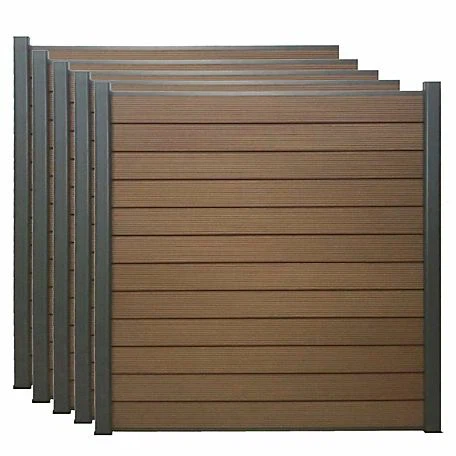
If you're using WPC Timber Tubes for fencing, you can combine them with Composite WPC Fence. The whole fence system will be able to handle the cold weather, providing a long - lasting and attractive boundary for your property.
Testing and Quality Assurance
At our company, we don't just claim that our WPC Timber Tubes can handle extreme temperatures. We put them through rigorous testing. We simulate both extreme heat and cold conditions in our labs to make sure that the tubes meet our high - quality standards.
We use temperature - controlled chambers to expose the tubes to different temperature ranges for extended periods. We also test for things like dimensional stability, impact resistance, and color fastness. Only after passing these tests do our WPC Timber Tubes go to the market.
Why Choose WPC Timber Tubes for Extreme Temperature Areas
There are several reasons why WPC Timber Tubes are a great choice for areas with extreme temperatures.
First of all, they are low - maintenance. Unlike traditional wood, you don't have to worry about staining, painting, or sealing them regularly. In extreme temperatures, traditional wood can warp, rot, or attract pests, which requires a lot of upkeep. WPC Timber Tubes, on the other hand, just need a simple cleaning from time to time.
Secondly, they are environmentally friendly. The use of recycled plastic and wood fibers in the production of WPC helps to reduce waste and conserve natural resources. This is a big plus for those who are conscious about the environment.
Finally, they offer a wide range of design options. You can choose from different sizes, shapes, and colors of WPC Timber Tubes to fit your specific project needs. Whether you're building a modern - style patio or a traditional - looking gazebo, there's a WPC Timber Tube that will work for you.
Contact Us for Your WPC Timber Tube Needs
If you're planning a project in an area with extreme temperatures and you're looking for a reliable and high - quality material, WPC Timber Tubes are definitely worth considering. We're here to help you with all your WPC Timber Tube needs. Whether you have questions about installation, sizing, or color options, our team of experts is ready to assist you. Contact us to start a conversation about your project and let's find the perfect WPC Timber Tubes for you.
References
- "Wood - Plastic Composites: Materials, Processing, and Products" by Anandjiwala, R. D., & Yousif, B. F.
- "Handbook of Wood Chemistry and Wood Composites" edited by R. Rowell, J. Han, and X. Cai.


