


Hey there! As a supplier of WPC Timber Tubes, I've gotten a ton of questions about how these bad boys hold up in windy conditions. So, I thought I'd sit down and write this blog to give you the lowdown.
First off, let's talk a bit about what WPC Timber Tubes are. WPC stands for Wood - Plastic Composite. These tubes are made by combining wood fibers and plastic polymers, which gives them some unique properties. You can check out more about them on our website: WPC Timber Tubes.
Structural Integrity in Windy Situations
One of the key factors in how WPC Timber Tubes perform in windy conditions is their structural integrity. The combination of wood and plastic creates a material that is both strong and flexible. Unlike traditional wooden tubes that can crack or break under high - wind stress, WPC Timber Tubes have the ability to bend slightly without losing their shape.
The plastic component in the composite acts as a binder, holding the wood fibers together. This means that even when strong winds put pressure on the tubes, the internal structure remains intact. Think of it like a flexible straw. If you try to bend a regular straw too much, it'll snap. But a flexible straw can bend and then return to its original shape. That's kind of how WPC Timber Tubes work in the wind.
Aerodynamics
Another important aspect is the aerodynamics of the WPC Timber Tubes. The smooth surface of these tubes helps to reduce wind resistance. When wind hits a rough surface, it creates turbulence, which can increase the pressure on the object. But with the sleek finish of WPC Timber Tubes, the wind can flow more smoothly around them.
This is similar to how race cars are designed with smooth curves to reduce air resistance. The less wind resistance the tubes have, the less stress they'll experience during windy conditions. As a result, they're less likely to be damaged or knocked over.
Installation and Wind Resistance
How you install WPC Timber Tubes also plays a huge role in their performance in windy areas. Proper installation is crucial. If the tubes are not securely fastened, even a moderate wind can cause them to shift or fall.
When installing WPC Timber Tubes, make sure to use high - quality fasteners. The foundation or support structure should be strong enough to withstand the forces exerted by the wind. For example, if you're using the tubes as part of a fence, the fence posts should be deeply embedded in the ground. You can find more information about related products like Composite WPC Fence on our website.
Long - Term Durability in Wind
Over time, exposure to wind can take a toll on any material. But WPC Timber Tubes are designed to be durable. They're resistant to rot, decay, and insect damage, which means that even after years of being buffeted by the wind, they'll still be in good condition.

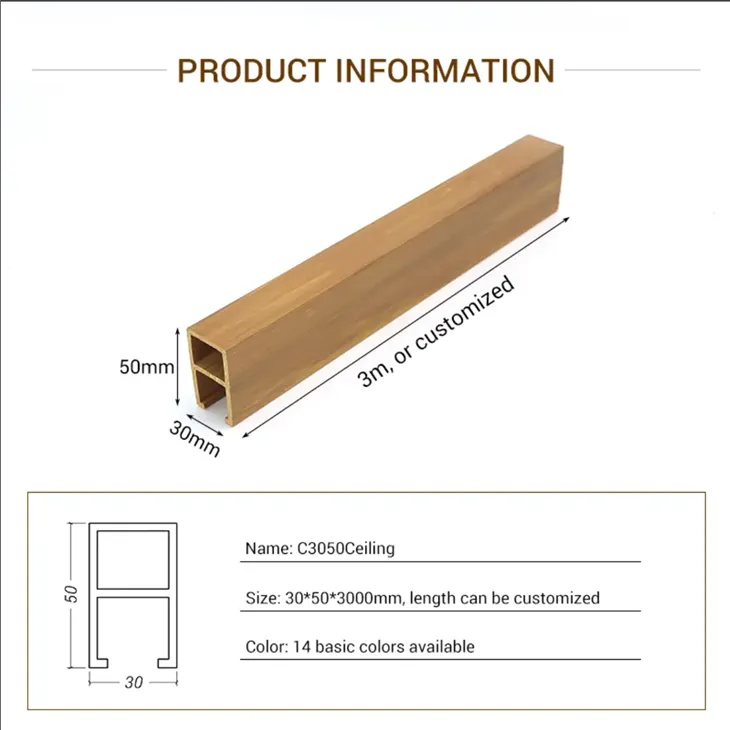
The plastic in the composite protects the wood fibers from moisture, which is often a contributing factor to decay. Without the threat of rot, the tubes can maintain their strength and integrity. This long - term durability is a huge advantage, especially in areas prone to strong winds.
Comparing with Other Materials
Let's compare WPC Timber Tubes with some other common materials used in similar applications. Traditional wooden tubes are more likely to warp, crack, or break in windy conditions. They're also vulnerable to moisture and pests, which can weaken them over time.
Metal tubes, on the other hand, can be heavy and may corrode. Corrosion can compromise the strength of the tubes, making them more susceptible to damage in the wind. In contrast, WPC Timber Tubes offer a good balance of strength, light weight, and durability.
Real - World Examples
I've heard from many customers who've installed WPC Timber Tubes in windy coastal areas. They've reported that the tubes have held up well, even during hurricanes and tropical storms. One customer in Florida used our tubes for a patio railing. After a major hurricane passed through the area, the railing was still standing, with only minor cosmetic damage.
Another customer in Australia installed WPC Timber Tubes as part of a garden fence. The area is known for its strong, gusty winds, but the fence has remained intact for several years. These real - world examples show that WPC Timber Tubes can perform admirably in challenging windy conditions.
WPC Timber Tubes in Different Applications
WPC Timber Tubes are versatile and can be used in a variety of applications. They're great for fences, handrails, pergolas, and even some architectural features. In all these applications, their performance in windy conditions is important.
For example, if you're using them for a pergola, strong winds could potentially cause the structure to collapse if the tubes aren't up to the task. But with the right design and installation, WPC Timber Tubes can provide a stable and reliable support for your pergola. You might also be interested in WPC Ceiling Panel for other related projects.
Conclusion
So, to sum it up, WPC Timber Tubes perform really well in windy conditions. Their structural integrity, aerodynamics, and long - term durability make them a great choice for areas where strong winds are common. Whether you're building a fence, a handrail, or a pergola, these tubes can withstand the forces of nature.
If you're thinking about using WPC Timber Tubes for your next project, I'd love to chat with you. We can discuss your specific needs and how our products can meet them. Contact us to start the procurement process and let's work together to make your project a success!
References
- Wood - Plastic Composite Materials: Properties and Applications, Journal of Composite Materials
- Aerodynamics of Building Structures, ASCE Publications


